


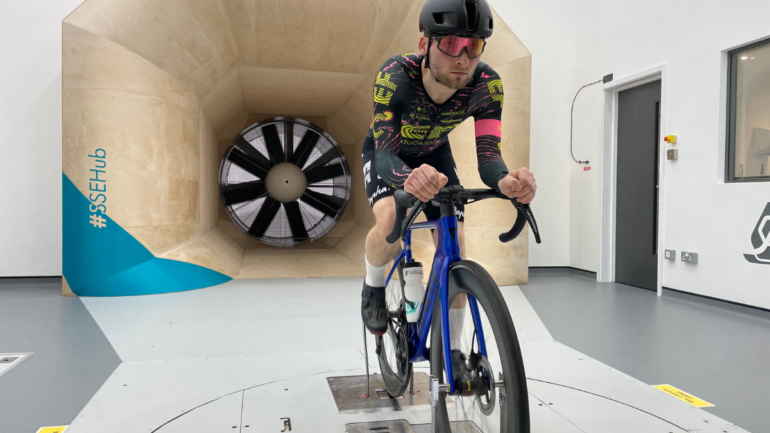
Hyper-Bikes Are Coming…
It seems like the only constant in the bike industry these days is change.
Every few years or so, the pendulum swings between the two extremes of what the ”must have” bike of the moment is, generally alternating in some guise between a lightweight climber, or an aero spaceship. There was a sweet spot between the two for a little while, where the Tarmac SL8 reigned supreme (and to be fair, still does), but it seems like there’s another, more extreme shift in cycling tectonics on the horizon, with the rise in the last year or so of the aero ”hyper-bike”.
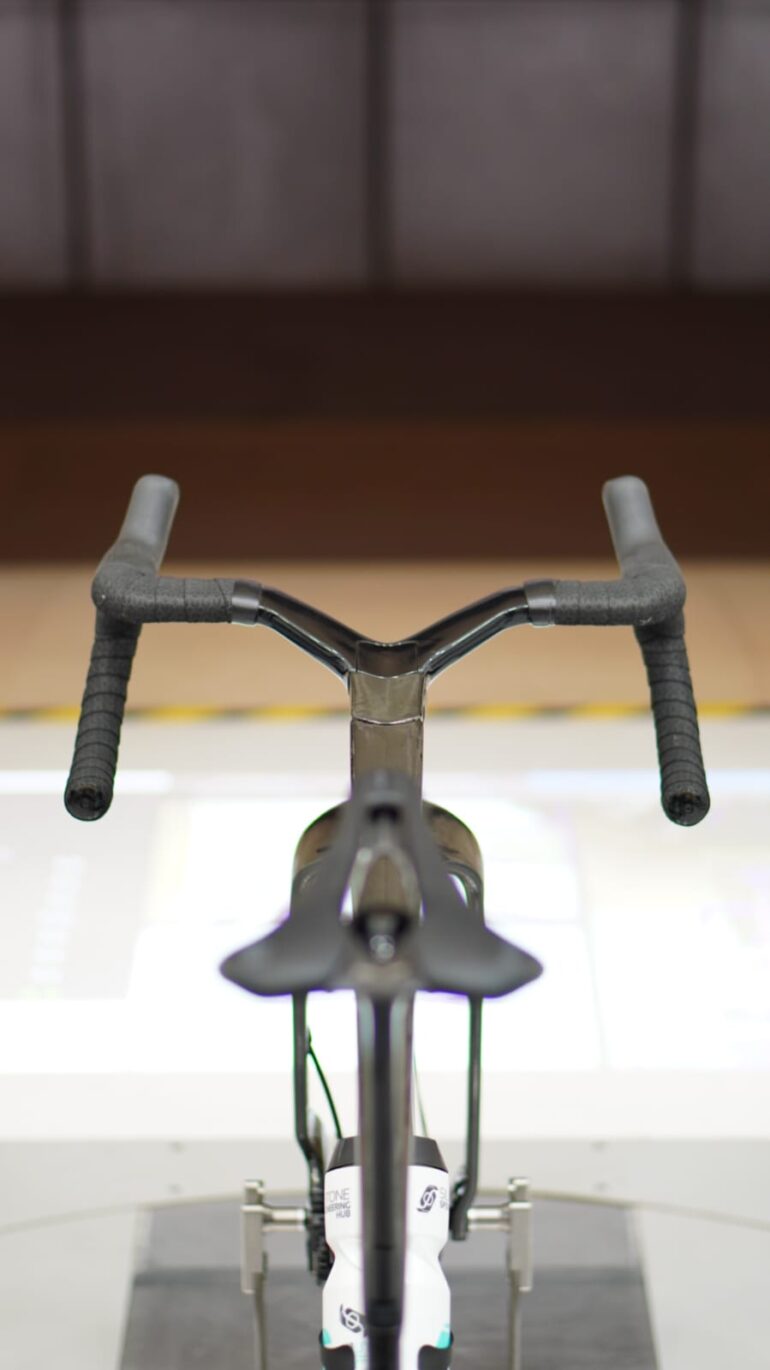
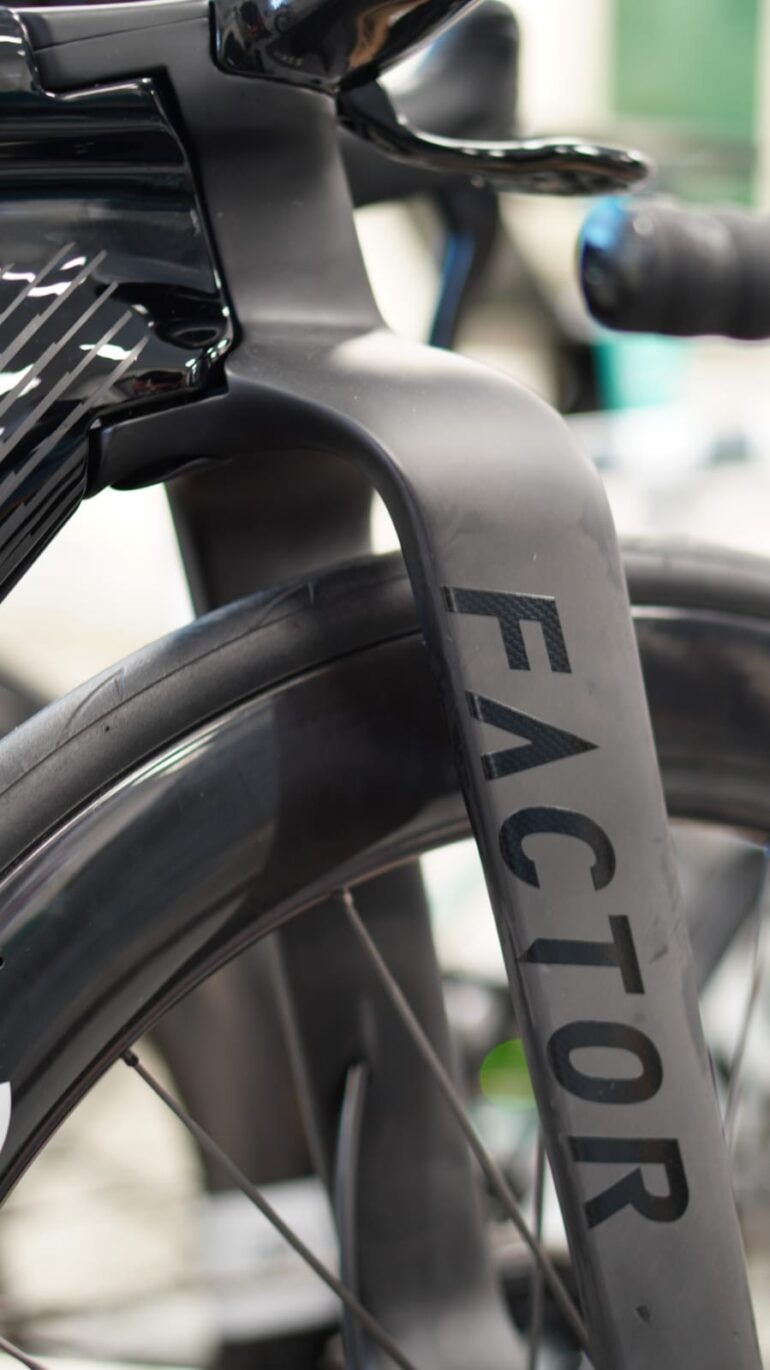
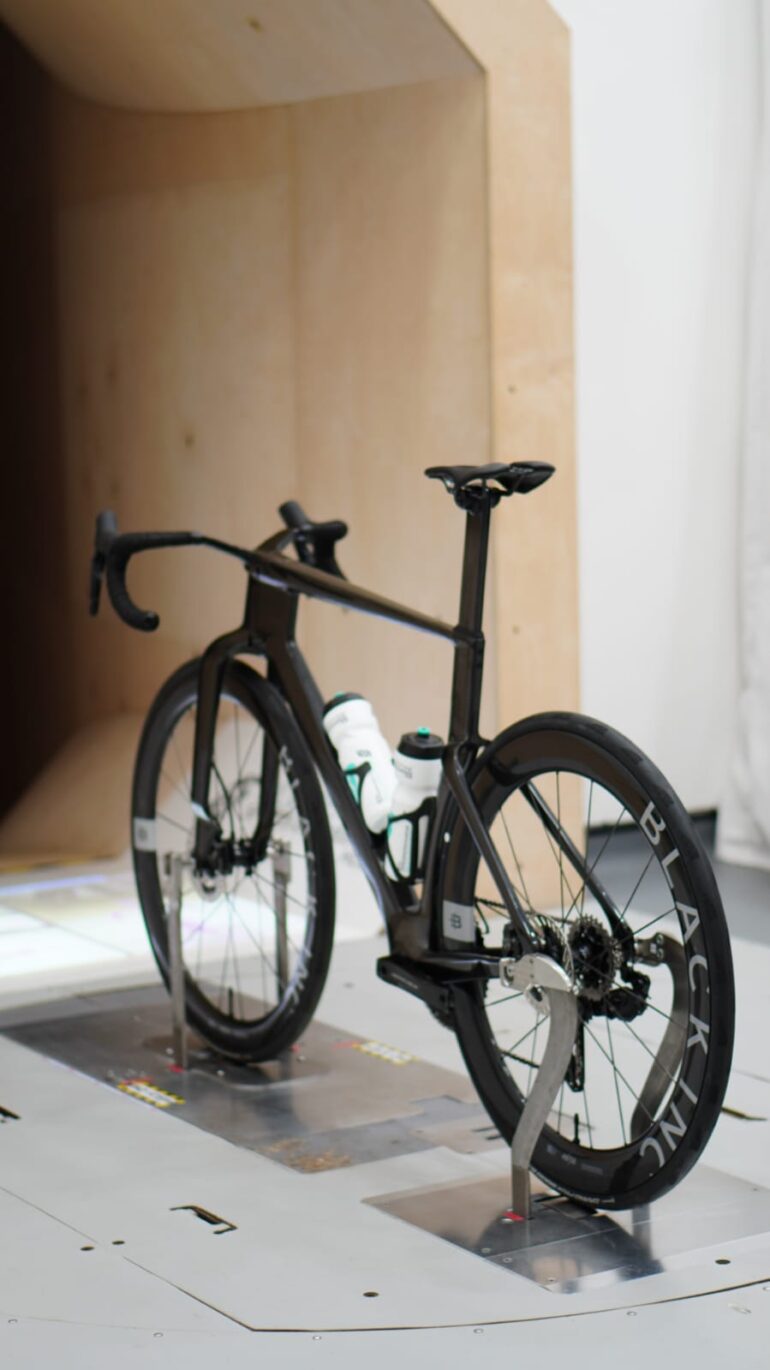
What is a ”Hyper-Bike”?
And why do we care, I hear you ask?
Well, let me explain.
The most obvious differences between these new bikes and the bikes we’ve come to accept as the ”norm” for what a road racing bike looks like (read; the Tarmac SL8, as this seems to be the most popular race bike bought by everyday riders at the moment) are the aesthetics – these new bikes are pretty striking to say the least, pushing the envelope as to what’s possible within the ever-changing UCI regulations for bicycle design.
Aerofoils are getting deeper, cockpit designs are becoming more and more integrated / proprietary, and if you look at the Hope / Lotus track bike that Team GB were using at the Paris Olympics, fork legs are also getting wider.
That’s all well and good. Bikes are looking more like spaceships.
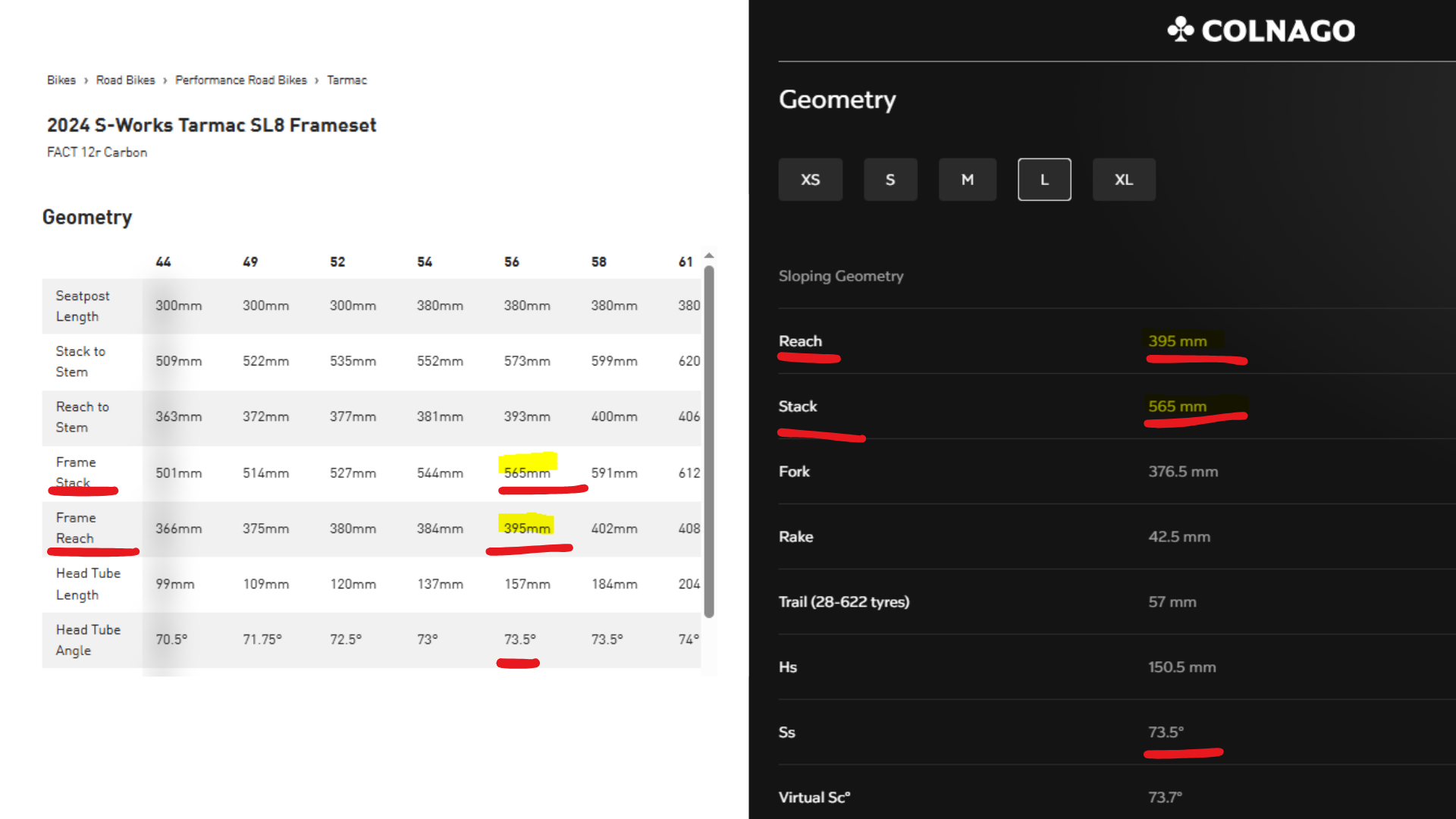
From a bike fit and geometry standpoint however, if you look at the geometry tables of the current crop of aero bikes, they’re all relatively ”normal” when compared to our Tarmac SL8 benchmark. A Colnago Y1R-S, which looks wild with its crazy seat post cluster and gull-winged cockpit set up is almost identical in a size L frame to a 56cm Tarmac SL8, so far as frame stack & reach and seat tube angle is concerned.

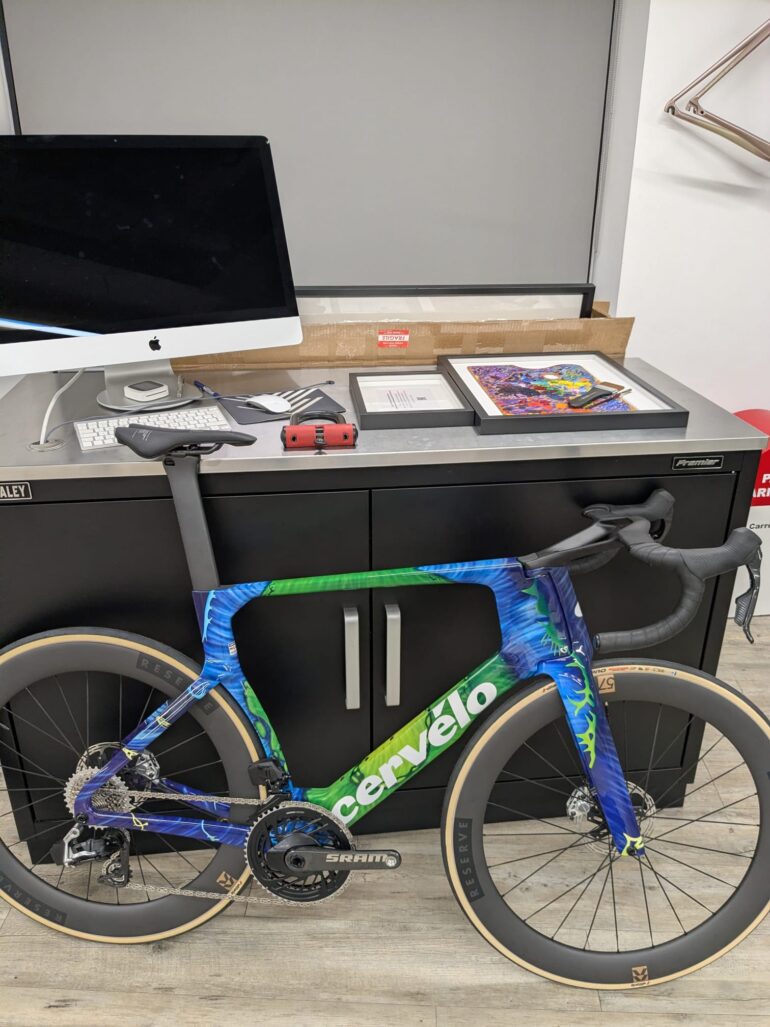
The same can be said for Cervelo’s S5.
Cervelo arguably started this whole cascade of wild cockpit designs on aero bikes a few years ago when they released the first iteration of the S5 disc in 2019. The geometry however has stayed even more “traditional race bike”, with a 73 degree sea tube angle, as well as stack and reach figures only millimeters off our Tarmac SL8 benchmark in a 56cm frame.
In short, notwithstanding the potential headaches of having a heavily proprietary cockpit setup and seatpost shape (with likely limited setback options), these bikes actually fit like a normal bike. A quick 2 minute comparison between geometry charts, and chances are, you’ll be able to work out accurately what frame size and cockpit setup would work, compared to say, your SL8.

This has always been relatively good news from a consumer standpoint, as there is a higher likelihood that the expensive bike you’re about to buy will fit you, or at least be somewhere close!
Going Left Field…
This is where things get interesting, for both riders and bike fitters…
What we’re starting to see with the new crop of hyper-bikes however, is not only their crazy aesthetics, but also a big shift in geometry. It’s this shift in frame geometry that has real world consequences for the folks that are actually going to be buying these bikes, if the changes aren’t fully appreciated / considered prior to purchase.
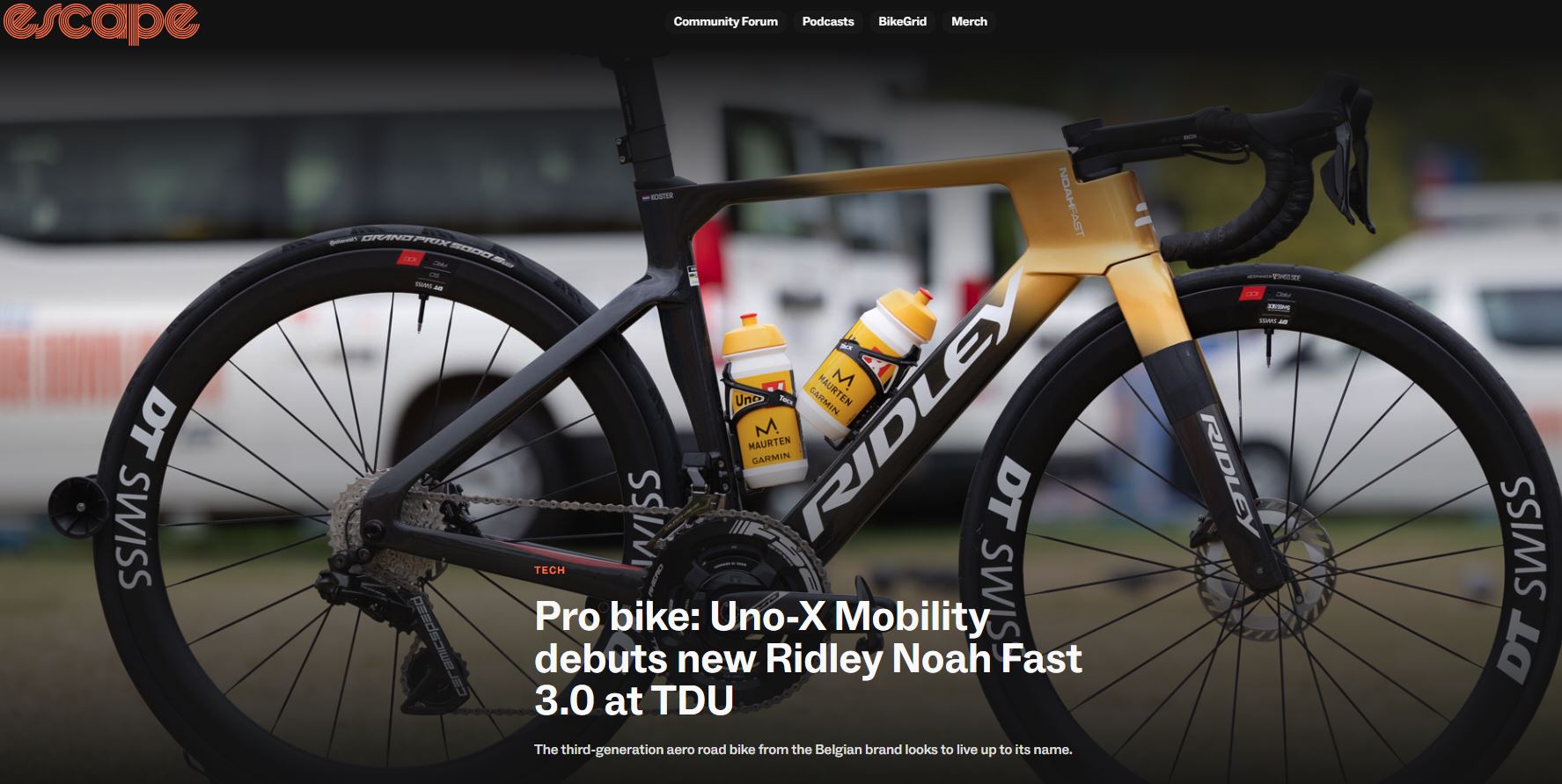
When Ridley launched their updated Noah Fast 3.0 aero bike at the beginning of 2025 at the Tour Down Under, not only did it cause quite a stir from an aesthetic standpoint, but it also marked this shift to a more progressive geometry that we hadn’t seen before in aero road bikes.

If we compare the geometry number of the outgoing Ridley Noach Fast Disc to the new Noah Fast 3.0 hyper-bike in a size S, the differences are incredibly stark. The seat tube angle is now 2 degrees steeper, the reach is 25mm longer, and the frame stack is now 20mm lower. This is a massive shift for what is, by the letter on the frame at least, the same size of bike! These geometry numbers are now starting to have much more in common with track and time trial bikes compared to road bikes as we’ve previously known / currently know them.

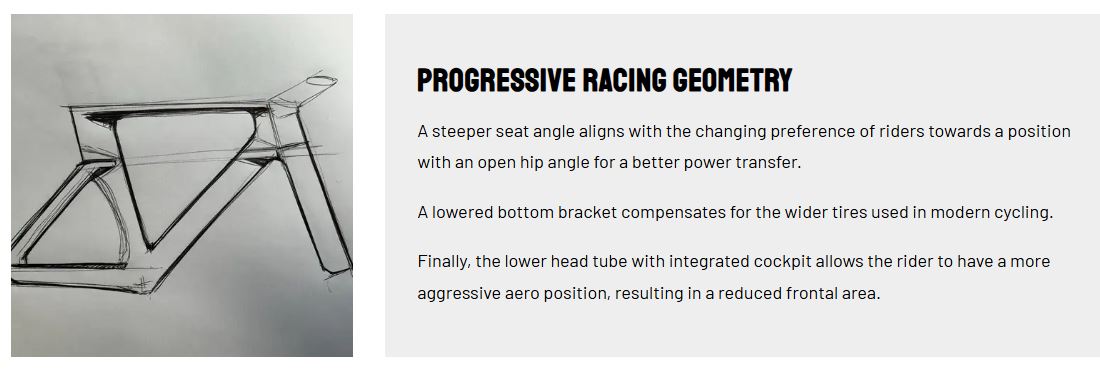
Progressive Racing Geometry
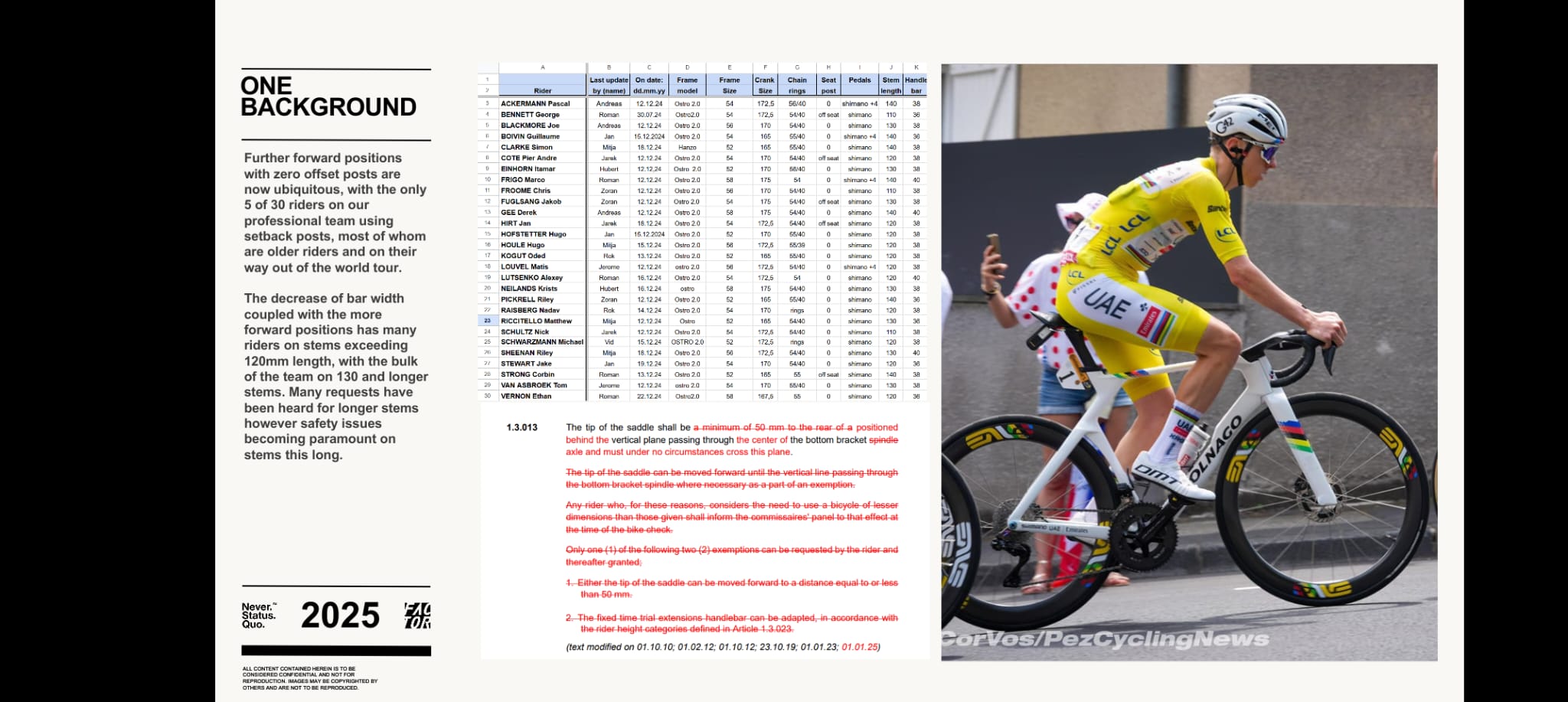
This shift into a notably more forward position on the bike relative to the bottom bracket can work well for some pro riders in certain instances; a more TT- like position can be an advantage in breakaway situations, where the rider can adopt a more aggressive aerodynamic position, whilst mitigating postural stress in the hips at peak flexion.
This thinking is nothing new though; Adam Hansen was doing this as far back as 2014, heavily modifying his Ridley Helium SL/SLX bikes with forward facing seat posts, -20 degree 150mm stems, 380mm bars and 180mm cranks!
These bikes can also work well for sprinters, up to a point. There are the obvious benefits of these bikes being incredibly stiff, but the longer reach and lower stack height can allow riders to position their weight further forwards relative to the feet in the sprint to optimise hip extension (and thus the posterior chain), when sprinting at very high speeds out of the saddle. Mark Cavendish’s super low & forward sprinting position is a great example of this. As always however, we can get to the point where we can have too much of a good thing, and if the rider’s centre of gravity becomes too far forwards, then there may well be a loss of traction in the rear wheel under high sprint loads as a result.

Perhaps the most stark example of this was the Factor aero prototype, which broke cover after being ridden to victory by Jake Stewart on stage 5 of the 2025 Criterium du Dauphine. This bike has yet to make it to production, but having seen the geometry chart for this bike, it takes the geometric themes from the Ridley Noah Fast 3.0 and cranks the dial up to 11. Whilst I can’t share details at the time of writing, let’s just say that the geometry numbers are very much more TT bike than they are road bike…
Whilst recently discussing the new hyper-bike trend and, specifically the markedly different geometry of the new Factor aero bike in the shop, Dan Pells, Head of Sales at Bespoke Cycling in London posed an interesting question; “So, as bike fitters, how do you get riders comfortable on these bikes?”.
That’s an interesting question, and one we’ll likely encounter in the real world sooner rather than later.
Can Hyper-Bikes Be Comfortable?
As we all know, there is no such thing as wizardry and sorcery in bike fitting…
It’s all logic, reason and managing the laws of physics. The answer all depends on how an individual defines comfort.
In my mind, comfort on a performance orientated bicycle can be defined as follows; “The position one can realistically sustain, for the required duration of the ride, whilst maintaining the necessary/desired output.”
It’s essentially a force management equation. If the math doesn’t math, so to speak, that’s when we start to run into problems.
Posture and stability is, of course, vitally important not only in life, but also in cycling – on a very basic level, it’s what keeps up in the right relationship to gravity and from falling over all of the time. We talk a lot about “stacking” the body in order to create a balanced posture, from which, given the prerequisite strength and ability to move into different shapes is present, we can manipulate our bodies to do certain things; ergo, ride bikes.

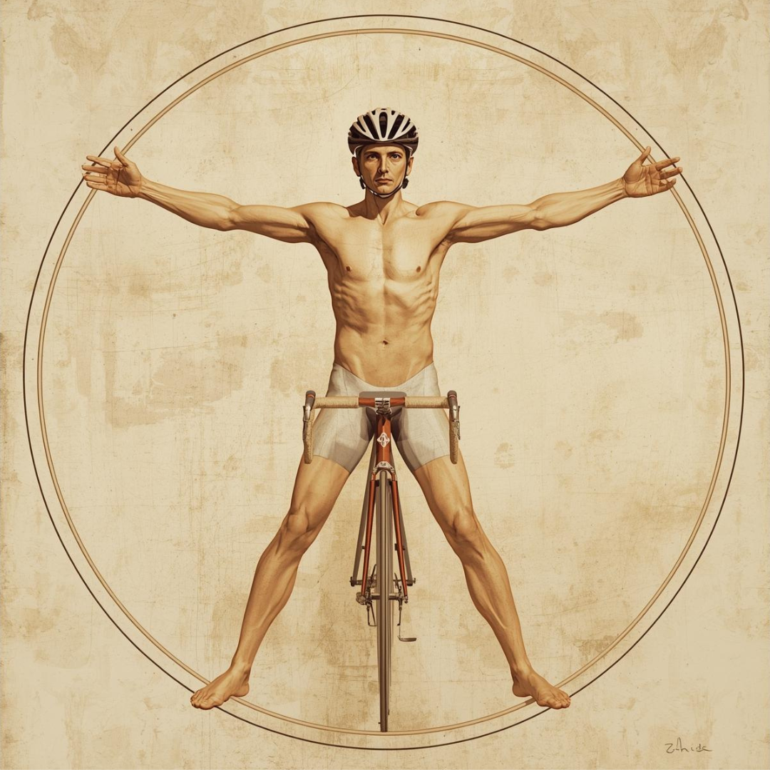
Imagine we’re standing upright on the ground, with our body stacked in neutral posture (trigger alert) on top of our feet. When we hinge forwards from our hips (in the necessary way required to effectively cover distance from the saddle to the handlebars), our bodyweight shifts around our feet. Our heavy heads and torso’s move forwards, and in order to remain balanced, our hips need to shift backwards in order to stop us falling forwards.
Bike geometry as we’ve known it to date does a pretty good job of helping riders balance this force management equation. Generally speaking, 73-74 degree seat tube angles place a riders weight far back enough relative to the feet to offset the additional weight of the head and torso as a result of hinging forwards from the hips to adopt the optimal bike riding posture. This balances the books as it were, allowing the rider to maintain their position for as long as they have the strength / capacity to do so.
So, what happens when you steepen the seat tube angle of the bike from say 73.5 degrees to 75.5 degrees, lengthen the reach of the bike by 25mm and drop the stack by 20mm, as per the example of the Ridley Noah Fast 3.0 above?

Well, you still have to balance the books in terms of managing bodyweight relative to gravity, but it just became a whole load harder to do so, providing the capacity and output that the same rider can produce hasn’t changed.
The Reason It’s Harder…
As the seat tube angle becomes steeper, your hips can’t move as far back to counteract the weight of the head and torso, so the position becomes more “top heavy”. To prevent the bike from becoming too short relative to this steeper seat tube angle, the overall reach of the frame / bike also has to be increased. These two elements, combined with low frame stack heights, require more capacity (read; energy) from the rider to maintain the position for the same output. This can often place significant strain on a rider’s hands, arms and shoulders, resulting in a plethora of unnecessary discomforts.
So how do pro riders get away with riding these more forward positions for weeks on end during a Grand Tour?
The short answer? World tour level power, functionality and strength – which most of us just don’t possess.


The more forward position that these bikes place a rider in can be somewhat offset by applying more force through the feet / pedals. This places less demand on the nose of the saddle and upper body to create stability by using the bike as a crutch to brace against.
In short, it’s an unrealistic expectation for the amateur rider to be able to ride a pro level position, with half (at best) of the power of a pro rider to offset the additional postural load.
Now, there are some bike fit decisions that can be made that may help those of us that don’t possess World Tour level power to ride these bikes in more “relative” comfort.
Things like a more rearward cleat position, shorter crank lengths and ensuring that the foot is adequately supported inside the shoe through appropriate arch support and wedging can help create more stability for a rider. Creating the most stable platform possible for the foot is generally a good idea regardless of what bike you’re riding though, so this bike fit “hack” only goes so far…

So, What’s the Answer?
Longer term, if you want to ride one of these hyper-bikes and have half a chance at enjoying it, increasing the capacity of the body to be able to manage the higher postural demands of the more forward position relative to gravity is the only real way to do it.
This means working not only on how much force you can produce and apply through the pedals – that’s the easy bit – but also, and more importantly, the postural shapes you can achieve and maintain to be able to recruit the desired muscle groups in the most optimal way.


What I hope I’ve been able to highlight in this article is that with this new crop of proprietary, highly integrated hyper-bikes that seem to be emerging, body positioning and bike fit is becoming less and less of a choice.
Not only will riders need to be better equipped to handle the increased physical demand that their new bike (and relationship to gravity) requires, but bike fitters are also going to need to think outside of the current box in order to help riders create the best bike environment possible within these new parameters.
There is also a responsibility for bike shop sales staff to be clear and up front about what these bikes are, and what they are not when having conversations with riders about potentially purchasing one of these types of bikes.
Ultimately though, the choice is down to us individuals as riders and what we’re willing to do to improve our ride.
The best (and only) way is to make informed decisions based on knowledge and information, then there is less chance of being surprised and/or disappointed when we’re out on the road.
As always, just calling it as I see it.
Words by Mat (one ‘t’)

If you’ve made it to the end of this article, thank you and we hope it’s been useful for you.
If you have any questions about the right bike fit for you get in touch, we’re always an open door and there’s no such thing as a silly question: info@foundation.fit
Check out our in-depth conversation about Hyper Bikes on the Cycling Demystified Podcast and visit our podcast page for more episodes.